•  
Tie-Dye Technique Of Bai Ethnic Group - Chin

Tie-Dye Technique Of Bai Ethnic Group - Chin

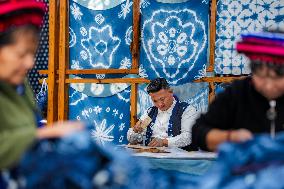
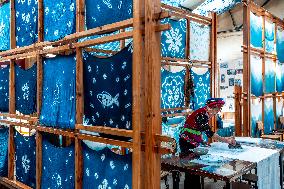
Duan Yuan, an inheritor of the tie-dye technique of Bai ethnic group, makes tie-dye designs in a dyehouse in Zhoucheng Village of Dali Bai Autonomous Prefecture, southwest China's Yunnan Province, November 21, 2025. Known as the hometown of the tie-dye technique of Bai ethnic group, Zhoucheng Village hosts over 200 households engaging in tie-dye businesses, with the number of employees exceeding 4,000. As a traditional folk technique of the Bai ethnic group, tie-dye boasts a history spanning over a thousand years and was included in the first batch of China's national intangible cultural heritage list in 2006. Tying and dyeing are the core steps in the process of making indigo tie-dye products. Artisans use needles and threads to create various patterns on the fabric, which are then dyed with plant-based dyes, resulting in blue backgrounds adorned with vivid white patterns. Photo by Hu Chao/Xinhua/ABACAPRESS.COM

  •  
Tie-Dye Technique Of Bai Ethnic Group - Chin

Tie-Dye Technique Of Bai Ethnic Group - Chin

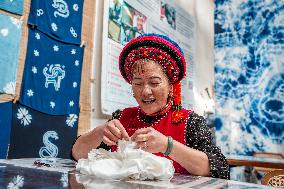
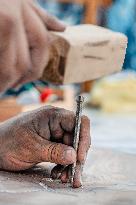
Duan Yinmei, an inheritor of the tie-dye technique of Bai ethnic group, creates knots on fabrics in a dyehouse in Zhoucheng Village of Dali Bai Autonomous Prefecture, southwest China's Yunnan Province, November 21, 2025. Known as the hometown of the tie-dye technique of Bai ethnic group, Zhoucheng Village hosts over 200 households engaging in tie-dye businesses, with the number of employees exceeding 4,000. As a traditional folk technique of the Bai ethnic group, tie-dye boasts a history spanning over a thousand years and was included in the first batch of China's national intangible cultural heritage list in 2006. Tying and dyeing are the core steps in the process of making indigo tie-dye products. Artisans use needles and threads to create various patterns on the fabric, which are then dyed with plant-based dyes, resulting in blue backgrounds adorned with vivid white patterns. Photo by Hu Chao/Xinhua/ABACAPRESS.COM

  •  
Tie-Dye Technique Of Bai Ethnic Group - Chin

Tie-Dye Technique Of Bai Ethnic Group - Chin

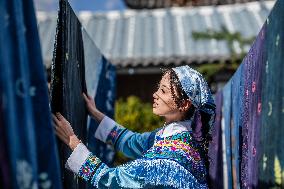
A woman experiences the tie-dye technique of Bai ethnic group in a dyehouse in Zhoucheng Village of Dali Bai Autonomous Prefecture, southwest China's Yunnan Province, November 21, 2025. Known as the hometown of the tie-dye technique of Bai ethnic group, Zhoucheng Village hosts over 200 households engaging in tie-dye businesses, with the number of employees exceeding 4,000. As a traditional folk technique of the Bai ethnic group, tie-dye boasts a history spanning over a thousand years and was included in the first batch of China's national intangible cultural heritage list in 2006. Tying and dyeing are the core steps in the process of making indigo tie-dye products. Artisans use needles and threads to create various patterns on the fabric, which are then dyed with plant-based dyes, resulting in blue backgrounds adorned with vivid white patterns. Photo by Hu Chao/Xinhua/ABACAPRESS.COM

  •  
Tie-Dye Technique Of Bai Ethnic Group - Chin

Tie-Dye Technique Of Bai Ethnic Group - Chin

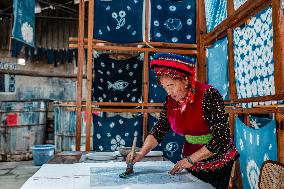
Duan Yinmei, an inheritor of the tie-dye technique of Bai ethnic group, dyes patterns on fabrics in a dyehouse in Zhoucheng Village of Dali Bai Autonomous Prefecture, southwest China's Yunnan Province, November 21, 2025. Known as the hometown of the tie-dye technique of Bai ethnic group, Zhoucheng Village hosts over 200 households engaging in tie-dye businesses, with the number of employees exceeding 4,000. As a traditional folk technique of the Bai ethnic group, tie-dye boasts a history spanning over a thousand years and was included in the first batch of China's national intangible cultural heritage list in 2006. Tying and dyeing are the core steps in the process of making indigo tie-dye products. Artisans use needles and threads to create various patterns on the fabric, which are then dyed with plant-based dyes, resulting in blue backgrounds adorned with vivid white patterns. Photo by Hu Chao/Xinhua/ABACAPRESS.COM

  •  
Tie-Dye Technique Of Bai Ethnic Group - Chin

Tie-Dye Technique Of Bai Ethnic Group - Chin

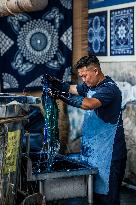
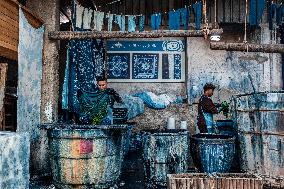
Duan Yuan, an inheritor of the tie-dye technique of Bai ethnic group, rinses dyed fabrics in a dyehouse in Zhoucheng Village of Dali Bai Autonomous Prefecture, southwest China's Yunnan Province, November 21, 2025. Known as the hometown of the tie-dye technique of Bai ethnic group, Zhoucheng Village hosts over 200 households engaging in tie-dye businesses, with the number of employees exceeding 4,000. As a traditional folk technique of the Bai ethnic group, tie-dye boasts a history spanning over a thousand years and was included in the first batch of China's national intangible cultural heritage list in 2006. Tying and dyeing are the core steps in the process of making indigo tie-dye products. Artisans use needles and threads to create various patterns on the fabric, which are then dyed with plant-based dyes, resulting in blue backgrounds adorned with vivid white patterns. Photo by Hu Chao/Xinhua/ABACAPRESS.COM

  •  
Tie-Dye Technique Of Bai Ethnic Group - Chin

Tie-Dye Technique Of Bai Ethnic Group - Chin

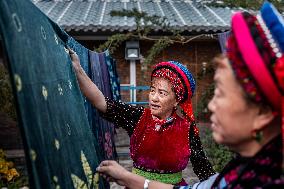
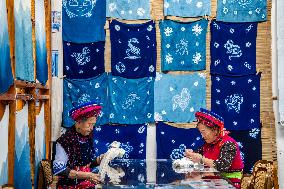
Duan Yinmei (L), an inheritor of the tie-dye technique of Bai ethnic group, and handicraftsman Duan Lilan dry tie-dye fabrics in a dyehouse in Zhoucheng Village of Dali Bai Autonomous Prefecture, southwest China's Yunnan Province, November 21, 2025. Known as the hometown of the tie-dye technique of Bai ethnic group, Zhoucheng Village hosts over 200 households engaging in tie-dye businesses, with the number of employees exceeding 4,000. As a traditional folk technique of the Bai ethnic group, tie-dye boasts a history spanning over a thousand years and was included in the first batch of China's national intangible cultural heritage list in 2006. Tying and dyeing are the core steps in the process of making indigo tie-dye products. Artisans use needles and threads to create various patterns on the fabric, which are then dyed with plant-based dyes, resulting in blue backgrounds adorned with vivid white patterns. Photo by Hu Chao/Xinhua/ABACAPRESS.COM

  •  
Tie-Dye Technique Of Bai Ethnic Group - Chin

Tie-Dye Technique Of Bai Ethnic Group - Chin

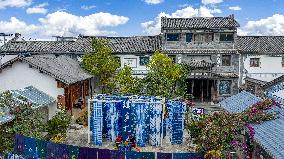
An aerial drone photo shows a scene at a dyehouse in Zhoucheng Village of Dali Bai Autonomous Prefecture, southwest China's Yunnan Province, November 21, 2025. Known as the hometown of the tie-dye technique of Bai ethnic group, Zhoucheng Village hosts over 200 households engaging in tie-dye businesses, with the number of employees exceeding 4,000. As a traditional folk technique of the Bai ethnic group, tie-dye boasts a history spanning over a thousand years and was included in the first batch of China's national intangible cultural heritage list in 2006. Tying and dyeing are the core steps in the process of making indigo tie-dye products. Artisans use needles and threads to create various patterns on the fabric, which are then dyed with plant-based dyes, resulting in blue backgrounds adorned with vivid white patterns. Photo by Hu Chao/Xinhua/ABACAPRESS.COM

  •  
Tie-Dye Technique Of Bai Ethnic Group - Chin

Tie-Dye Technique Of Bai Ethnic Group - Chin

Duan Yinmei (L), an inheritor of the tie-dye technique of Bai ethnic group, and handicraftsman Duan Lilan untie knots on fabrics in a dyehouse in Zhoucheng Village of Dali Bai Autonomous Prefecture, southwest China's Yunnan Province, November 21, 2025. Known as the hometown of the tie-dye technique of Bai ethnic group, Zhoucheng Village hosts over 200 households engaging in tie-dye businesses, with the number of employees exceeding 4,000. As a traditional folk technique of the Bai ethnic group, tie-dye boasts a history spanning over a thousand years and was included in the first batch of China's national intangible cultural heritage list in 2006. Tying and dyeing are the core steps in the process of making indigo tie-dye products. Artisans use needles and threads to create various patterns on the fabric, which are then dyed with plant-based dyes, resulting in blue backgrounds adorned with vivid white patterns. Photo by Hu Chao/Xinhua/ABACAPRESS.COM

  •  
Tie-Dye Technique Of Bai Ethnic Group - Chin

Tie-Dye Technique Of Bai Ethnic Group - Chin

Duan Yinmei (L), an inheritor of the tie-dye technique of Bai ethnic group, and handicraftsman Duan Lilan untie knots on fabrics in a dyehouse in Zhoucheng Village of Dali Bai Autonomous Prefecture, southwest China's Yunnan Province, November 21, 2025. Known as the hometown of the tie-dye technique of Bai ethnic group, Zhoucheng Village hosts over 200 households engaging in tie-dye businesses, with the number of employees exceeding 4,000. As a traditional folk technique of the Bai ethnic group, tie-dye boasts a history spanning over a thousand years and was included in the first batch of China's national intangible cultural heritage list in 2006. Tying and dyeing are the core steps in the process of making indigo tie-dye products. Artisans use needles and threads to create various patterns on the fabric, which are then dyed with plant-based dyes, resulting in blue backgrounds adorned with vivid white patterns. Photo by Hu Chao/Xinhua/ABACAPRESS.COM

  •  
Tie-Dye Technique Of Bai Ethnic Group - Chin

Tie-Dye Technique Of Bai Ethnic Group - Chin

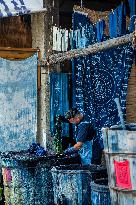
Duan Yuan (L), an inheritor of the tie-dye technique of Bai ethnic group, dyes fabrics in a dyehouse in Zhoucheng Village of Dali Bai Autonomous Prefecture, southwest China's Yunnan Province, November 21, 2025. Known as the hometown of the tie-dye technique of Bai ethnic group, Zhoucheng Village hosts over 200 households engaging in tie-dye businesses, with the number of employees exceeding 4,000. As a traditional folk technique of the Bai ethnic group, tie-dye boasts a history spanning over a thousand years and was included in the first batch of China's national intangible cultural heritage list in 2006. Tying and dyeing are the core steps in the process of making indigo tie-dye products. Artisans use needles and threads to create various patterns on the fabric, which are then dyed with plant-based dyes, resulting in blue backgrounds adorned with vivid white patterns. Photo by Hu Chao/Xinhua/ABACAPRESS.COM

  •  
Tie-Dye Technique Of Bai Ethnic Group - Chin

Tie-Dye Technique Of Bai Ethnic Group - Chin

Duan Yuan, an inheritor of the tie-dye technique of Bai ethnic group, makes tie-dye designs in a dyehouse in Zhoucheng Village of Dali Bai Autonomous Prefecture, southwest China's Yunnan Province, November 21, 2025. Known as the hometown of the tie-dye technique of Bai ethnic group, Zhoucheng Village hosts over 200 households engaging in tie-dye businesses, with the number of employees exceeding 4,000. As a traditional folk technique of the Bai ethnic group, tie-dye boasts a history spanning over a thousand years and was included in the first batch of China's national intangible cultural heritage list in 2006. Tying and dyeing are the core steps in the process of making indigo tie-dye products. Artisans use needles and threads to create various patterns on the fabric, which are then dyed with plant-based dyes, resulting in blue backgrounds adorned with vivid white patterns. Photo by Hu Chao/Xinhua/ABACAPRESS.COM

  •  
Tie-Dye Technique Of Bai Ethnic Group - Chin

Tie-Dye Technique Of Bai Ethnic Group - Chin

Duan Yuan, an inheritor of the tie-dye technique of Bai ethnic group, dyes fabrics in a dyehouse in Zhoucheng Village of Dali Bai Autonomous Prefecture, southwest China's Yunnan Province, November 21, 2025. Known as the hometown of the tie-dye technique of Bai ethnic group, Zhoucheng Village hosts over 200 households engaging in tie-dye businesses, with the number of employees exceeding 4,000. As a traditional folk technique of the Bai ethnic group, tie-dye boasts a history spanning over a thousand years and was included in the first batch of China's national intangible cultural heritage list in 2006. Tying and dyeing are the core steps in the process of making indigo tie-dye products. Artisans use needles and threads to create various patterns on the fabric, which are then dyed with plant-based dyes, resulting in blue backgrounds adorned with vivid white patterns. Photo by Hu Chao/Xinhua/ABACAPRESS.COM

  •  
Tie-Dye Technique Of Bai Ethnic Group - Chin

Tie-Dye Technique Of Bai Ethnic Group - Chin

Duan Yuan, an inheritor of the tie-dye technique of Bai ethnic group, dyes fabrics in a dyehouse in Zhoucheng Village of Dali Bai Autonomous Prefecture, southwest China's Yunnan Province, November 21, 2025. Known as the hometown of the tie-dye technique of Bai ethnic group, Zhoucheng Village hosts over 200 households engaging in tie-dye businesses, with the number of employees exceeding 4,000. As a traditional folk technique of the Bai ethnic group, tie-dye boasts a history spanning over a thousand years and was included in the first batch of China's national intangible cultural heritage list in 2006. Tying and dyeing are the core steps in the process of making indigo tie-dye products. Artisans use needles and threads to create various patterns on the fabric, which are then dyed with plant-based dyes, resulting in blue backgrounds adorned with vivid white patterns. Photo by Hu Chao/Xinhua/ABACAPRESS.COM

  •  
Tie-Dye Technique Of Bai Ethnic Group - Chin

Tie-Dye Technique Of Bai Ethnic Group - Chin

Duan Yuan, an inheritor of the tie-dye technique of Bai ethnic group, makes tie-dye designs in a dyehouse in Zhoucheng Village of Dali Bai Autonomous Prefecture, southwest China's Yunnan Province, November 21, 2025. Known as the hometown of the tie-dye technique of Bai ethnic group, Zhoucheng Village hosts over 200 households engaging in tie-dye businesses, with the number of employees exceeding 4,000. As a traditional folk technique of the Bai ethnic group, tie-dye boasts a history spanning over a thousand years and was included in the first batch of China's national intangible cultural heritage list in 2006. Tying and dyeing are the core steps in the process of making indigo tie-dye products. Artisans use needles and threads to create various patterns on the fabric, which are then dyed with plant-based dyes, resulting in blue backgrounds adorned with vivid white patterns. Photo by Hu Chao/Xinhua/ABACAPRESS.COM

  •  
Tie-Dye Technique Of Bai Ethnic Group - Chin

Tie-Dye Technique Of Bai Ethnic Group - Chin

Duan Yinmei, an inheritor of the tie-dye technique of Bai ethnic group, unties knots on fabrics in a dyehouse in Zhoucheng Village of Dali Bai Autonomous Prefecture, southwest China's Yunnan Province, November 21, 2025. Known as the hometown of the tie-dye technique of Bai ethnic group, Zhoucheng Village hosts over 200 households engaging in tie-dye businesses, with the number of employees exceeding 4,000. As a traditional folk technique of the Bai ethnic group, tie-dye boasts a history spanning over a thousand years and was included in the first batch of China's national intangible cultural heritage list in 2006. Tying and dyeing are the core steps in the process of making indigo tie-dye products. Artisans use needles and threads to create various patterns on the fabric, which are then dyed with plant-based dyes, resulting in blue backgrounds adorned with vivid white patterns. Photo by Hu Chao/Xinhua/ABACAPRESS.COM

  •  
Tie-Dye Technique Of Bai Ethnic Group - Chin

Tie-Dye Technique Of Bai Ethnic Group - Chin

Duan Yinmei, an inheritor of the tie-dye technique of Bai ethnic group, dyes patterns on fabrics in a dyehouse in Zhoucheng Village of Dali Bai Autonomous Prefecture, southwest China's Yunnan Province, November 21, 2025. Known as the hometown of the tie-dye technique of Bai ethnic group, Zhoucheng Village hosts over 200 households engaging in tie-dye businesses, with the number of employees exceeding 4,000. As a traditional folk technique of the Bai ethnic group, tie-dye boasts a history spanning over a thousand years and was included in the first batch of China's national intangible cultural heritage list in 2006. Tying and dyeing are the core steps in the process of making indigo tie-dye products. Artisans use needles and threads to create various patterns on the fabric, which are then dyed with plant-based dyes, resulting in blue backgrounds adorned with vivid white patterns. Photo by Hu Chao/Xinhua/ABACAPRESS.COM

  •  
Tie-Dye Technique Of Bai Ethnic Group - Chin

Tie-Dye Technique Of Bai Ethnic Group - Chin

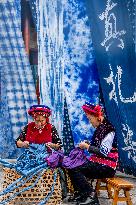
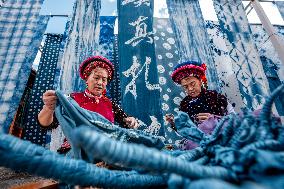
Duan Yinmei (R), an inheritor of the tie-dye technique of Bai ethnic group, and handicraftsman Duan Lilan create knots on fabrics in a dyehouse in Zhoucheng Village of Dali Bai Autonomous Prefecture, southwest China's Yunnan Province, November 21, 2025. Known as the hometown of the tie-dye technique of Bai ethnic group, Zhoucheng Village hosts over 200 households engaging in tie-dye businesses, with the number of employees exceeding 4,000. As a traditional folk technique of the Bai ethnic group, tie-dye boasts a history spanning over a thousand years and was included in the first batch of China's national intangible cultural heritage list in 2006. Tying and dyeing are the core steps in the process of making indigo tie-dye products. Artisans use needles and threads to create various patterns on the fabric, which are then dyed with plant-based dyes, resulting in blue backgrounds adorned with vivid white patterns. Photo by Hu Chao/Xinhua/ABACAPRESS.COM

  •  
CHINA-GUANGXI-LONGLIN-PINGLIU VILLAGE-GANLAN BUILDINGS (CN)

CHINA-GUANGXI-LONGLIN-PINGLIU VILLAGE-GANLAN BUILDINGS (CN)

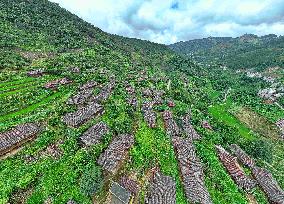
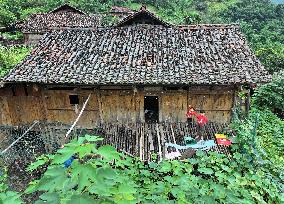
(240806) -- LONGLIN, Aug. 6, 2024 Photo by Xinhua/ABACAPRESS.COM) -- An aerial drone photo taken on July 31, 2024 shows a view of Ganlan buildings in Pingliu Village of Longlin County in south China's Guangxi Zhuang Autonomous Region. Pingliu Village, spanning a history of over 200 years, is a Zhuang ethnic-minority hamlet that borders neighboring provinces of Yunnan and Guizhou. Among the well preserved traditions and costumes of the local Zhuang ethnic minority group, the local housing facility, Ganlan building, a stilt wood-structured residential architecture, is most distinctive. Supported by wooden columns, the buildings are usually built in three stories with slope roofs. The ground floor is mainly served as livestock sheds, while the second floor and above are for family living and grain storage respectively. High above the ground, the Ganlan buildings help prevent humidity, increase ventilation and bring lights in people's living space. Photo by Xinhua/ABACAPRESS.COM/Zhou Hua)

  •  
CHINA-GUANGXI-LONGLIN-PINGLIU VILLAGE-GANLAN BUILDINGS (CN)

CHINA-GUANGXI-LONGLIN-PINGLIU VILLAGE-GANLAN BUILDINGS (CN)

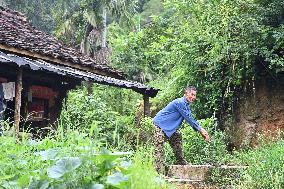
(240806) -- LONGLIN, Aug. 6, 2024 Photo by Xinhua/ABACAPRESS.COM) -- A villager washes hands in front of his wooden Ganlan building in Pingliu Village of Longlin County in south China's Guangxi Zhuang Autonomous Region, July 31, 2024. Pingliu Village, spanning a history of over 200 years, is a Zhuang ethnic-minority hamlet that borders neighboring provinces of Yunnan and Guizhou. Among the well preserved traditions and costumes of the local Zhuang ethnic minority group, the local housing facility, Ganlan building, a stilt wood-structured residential architecture, is most distinctive. Supported by wooden columns, the buildings are usually built in three stories with slope roofs. The ground floor is mainly served as livestock sheds, while the second floor and above are for family living and grain storage respectively. High above the ground, the Ganlan buildings help prevent humidity, increase ventilation and bring lights in people's living space. Photo by Xinhua/ABACAPRESS.COM/Zhou Hua)

  •  
CHINA-GUANGXI-LONGLIN-PINGLIU VILLAGE-GANLAN BUILDINGS (CN)

CHINA-GUANGXI-LONGLIN-PINGLIU VILLAGE-GANLAN BUILDINGS (CN)

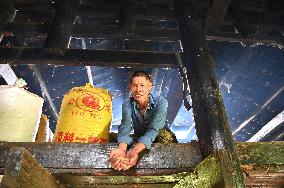
(240806) -- LONGLIN, Aug. 6, 2024 Photo by Xinhua/ABACAPRESS.COM) -- A villager shows rice stored on the top floor of his wooden Ganlan building in Pingliu Village of Longlin County in south China's Guangxi Zhuang Autonomous Region, July 31, 2024. Pingliu Village, spanning a history of over 200 years, is a Zhuang ethnic-minority hamlet that borders neighboring provinces of Yunnan and Guizhou. Among the well preserved traditions and costumes of the local Zhuang ethnic minority group, the local housing facility, Ganlan building, a stilt wood-structured residential architecture, is most distinctive. Supported by wooden columns, the buildings are usually built in three stories with slope roofs. The ground floor is mainly served as livestock sheds, while the second floor and above are for family living and grain storage respectively. High above the ground, the Ganlan buildings help prevent humidity, increase ventilation and bring lights in people's living space. Photo by Xinhua/ABACAPRESS.COM/Zhou Hua)

  •  
CHINA-GUANGXI-LONGLIN-PINGLIU VILLAGE-GANLAN BUILDINGS (CN)

CHINA-GUANGXI-LONGLIN-PINGLIU VILLAGE-GANLAN BUILDINGS (CN)

(240806) -- LONGLIN, Aug. 6, 2024 Photo by Xinhua/ABACAPRESS.COM) -- An aerial drone photo taken on July 31, 2024 shows two kids playing on a Ganlan building in Pingliu Village of Longlin County in south China's Guangxi Zhuang Autonomous Region. Pingliu Village, spanning a history of over 200 years, is a Zhuang ethnic-minority hamlet that borders neighboring provinces of Yunnan and Guizhou. Among the well preserved traditions and costumes of the local Zhuang ethnic minority group, the local housing facility, Ganlan building, a stilt wood-structured residential architecture, is most distinctive. Supported by wooden columns, the buildings are usually built in three stories with slope roofs. The ground floor is mainly served as livestock sheds, while the second floor and above are for family living and grain storage respectively. High above the ground, the Ganlan buildings help prevent humidity, increase ventilation and bring lights in people's living space. Photo by Xinhua/ABACAPRESS.COM/Zhou Hua)

  •  
XINHUA PHOTOS OF THE DAY

XINHUA PHOTOS OF THE DAY

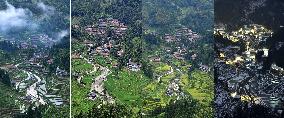
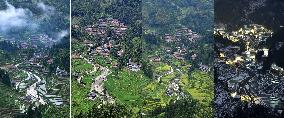
(240719) -- BEIJING, July 19, 2024 Photo by Xinhua/ABACAPRESS.COM) -- This combo photo taken from 2021 to 2024 shows the spring, summer, autumn and winter views (from L to R) of Wuying Village on the border between south China's Guangxi Zhuang Autonomous Region and southwest China's Guizhou Province. Wuying Village, spanning a history of over 200 years, is a Miao ethnic-minority hamlet that nestles snugly in the towering mountains stretching across the border between Guangxi and Guizhou. In the past, the impassable mountains and rugged landscape rendered locals extremely poor. In recent years, Wuying Village has made efforts in the fields of economy, education, culture and ethnic unity, etc. to promote rural revitalization for further development. Photo by Xinhua/ABACAPRESS.COM/Huang Xiaobang)

  •  
(EnchantingGuangxi)CHINA-GUANGXI-MIAO ETHNIC GROUP (CN)

(EnchantingGuangxi)CHINA-GUANGXI-MIAO ETHNIC GROUP (CN)

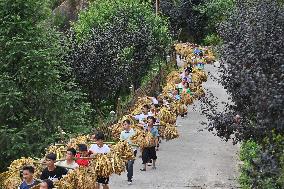
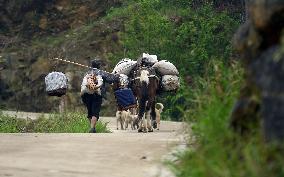
(240718) -- LIUZHOU, July 18, 2024 Photo by Xinhua/ABACAPRESS.COM) -- Villagers carry crop bundles to attend a feast celebrating the first month of a newborn baby in Wuying Village on the border between south China's Guangxi Zhuang Autonomous Region and southwest China's Guizhou Province, July 13, 2024. Wuying Village, spanning a history of over 200 years, is a Miao ethnic group hamlet that nestles snugly in the towering mountains stretching across the border between Guangxi and Guizhou. In the past, the impassable mountains and rugged landscape rendered locals extremely poor. In recent years, Wuying Village has made efforts in the fields of economy, education, culture and ethnic unity, etc. to promote rural vitalization for further development. Photo by Xinhua/ABACAPRESS.COM/Huang Xiaobang)

  •  
(EnchantingGuangxi)CHINA-GUANGXI-MIAO ETHNIC GROUP (CN)

(EnchantingGuangxi)CHINA-GUANGXI-MIAO ETHNIC GROUP (CN)

(240718) -- LIUZHOU, July 18, 2024 Photo by Xinhua/ABACAPRESS.COM) -- Villagers construct a wood building in Wuying Village on the border between south China's Guangxi Zhuang Autonomous Region and southwest China's Guizhou Province, July 21, 2022. Wuying Village, spanning a history of over 200 years, is a Miao ethnic group hamlet that nestles snugly in the towering mountains stretching across the border between Guangxi and Guizhou. In the past, the impassable mountains and rugged landscape rendered locals extremely poor. In recent years, Wuying Village has made efforts in the fields of economy, education, culture and ethnic unity, etc. to promote rural vitalization for further development. Photo by Xinhua/ABACAPRESS.COM/Huang Xiaobang)

  •  
(EnchantingGuangxi)CHINA-GUANGXI-MIAO ETHNIC GROUP (CN)

(EnchantingGuangxi)CHINA-GUANGXI-MIAO ETHNIC GROUP (CN)

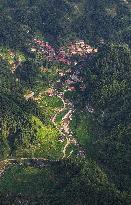
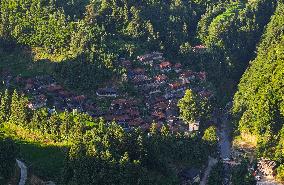
(240718) -- LIUZHOU, July 18, 2024 Photo by Xinhua/ABACAPRESS.COM) -- This aerial drone photo taken on July 10, 2024 shows a view of the Wuying Village on the border between south China's Guangxi Zhuang Autonomous Region and southwest China's Guizhou Province. Wuying Village, spanning a history of over 200 years, is a Miao ethnic group hamlet that nestles snugly in the towering mountains stretching across the border between Guangxi and Guizhou. In the past, the impassable mountains and rugged landscape rendered locals extremely poor. In recent years, Wuying Village has made efforts in the fields of economy, education, culture and ethnic unity, etc. to promote rural vitalization for further development. Photo by Xinhua/ABACAPRESS.COM/Huang Xiaobang)

  •  
(EnchantingGuangxi)CHINA-GUANGXI-MIAO ETHNIC GROUP (CN)

(EnchantingGuangxi)CHINA-GUANGXI-MIAO ETHNIC GROUP (CN)

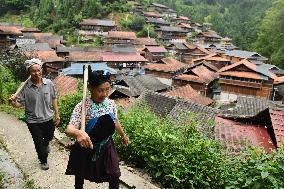
(240718) -- LIUZHOU, July 18, 2024 Photo by Xinhua/ABACAPRESS.COM) -- Villager Liang Yingmi (L) and his wife Liang Anhe go to work in Wuying Village on the border between south China's Guangxi Zhuang Autonomous Region and southwest China's Guizhou Province, July 18, 2024. Wuying Village, spanning a history of over 200 years, is a Miao ethnic group hamlet that nestles snugly in the towering mountains stretching across the border between Guangxi and Guizhou. In the past, the impassable mountains and rugged landscape rendered locals extremely poor. In recent years, Wuying Village has made efforts in the fields of economy, education, culture and ethnic unity, etc. to promote rural vitalization for further development. Photo by Xinhua/ABACAPRESS.COM/Huang Xiaobang)

  •  
(EnchantingGuangxi)CHINA-GUANGXI-MIAO ETHNIC GROUP (CN)

(EnchantingGuangxi)CHINA-GUANGXI-MIAO ETHNIC GROUP (CN)

(240718) -- LIUZHOU, July 18, 2024 Photo by Xinhua/ABACAPRESS.COM) -- Villager Pan Zhongqing goes to work in Wuying Village on the border between south China's Guangxi Zhuang Autonomous Region and southwest China's Guizhou Province, April 12, 2024. Wuying Village, spanning a history of over 200 years, is a Miao ethnic group hamlet that nestles snugly in the towering mountains stretching across the border between Guangxi and Guizhou. In the past, the impassable mountains and rugged landscape rendered locals extremely poor. In recent years, Wuying Village has made efforts in the fields of economy, education, culture and ethnic unity, etc. to promote rural vitalization for further development. Photo by Xinhua/ABACAPRESS.COM/Huang Xiaobang)

  •  
(EnchantingGuangxi)CHINA-GUANGXI-MIAO ETHNIC GROUP (CN)

(EnchantingGuangxi)CHINA-GUANGXI-MIAO ETHNIC GROUP (CN)

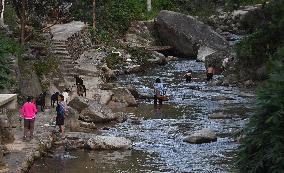
(240718) -- LIUZHOU, July 18, 2024 Photo by Xinhua/ABACAPRESS.COM) -- Chickens cross a river in Wuying Village on the border between south China's Guangxi Zhuang Autonomous Region and southwest China's Guizhou Province, Aug. 21, 2021. Wuying Village, spanning a history of over 200 years, is a Miao ethnic group hamlet that nestles snugly in the towering mountains stretching across the border between Guangxi and Guizhou. In the past, the impassable mountains and rugged landscape rendered locals extremely poor. In recent years, Wuying Village has made efforts in the fields of economy, education, culture and ethnic unity, etc. to promote rural vitalization for further development. Photo by Xinhua/ABACAPRESS.COM/Huang Xiaobang)

  •  
(EnchantingGuangxi)CHINA-GUANGXI-MIAO ETHNIC GROUP (CN)

(EnchantingGuangxi)CHINA-GUANGXI-MIAO ETHNIC GROUP (CN)

(240718) -- LIUZHOU, July 18, 2024 Photo by Xinhua/ABACAPRESS.COM) -- Children play under an ancient tree in Wuying Village on the border between south China's Guangxi Zhuang Autonomous Region and southwest China's Guizhou Province, July 18, 2024. Wuying Village, spanning a history of over 200 years, is a Miao ethnic group hamlet that nestles snugly in the towering mountains stretching across the border between Guangxi and Guizhou. In the past, the impassable mountains and rugged landscape rendered locals extremely poor. In recent years, Wuying Village has made efforts in the fields of economy, education, culture and ethnic unity, etc. to promote rural vitalization for further development. Photo by Xinhua/ABACAPRESS.COM/Huang Xiaobang)

  •  
(EnchantingGuangxi)CHINA-GUANGXI-MIAO ETHNIC GROUP (CN)

(EnchantingGuangxi)CHINA-GUANGXI-MIAO ETHNIC GROUP (CN)

(240718) -- LIUZHOU, July 18, 2024 Photo by Xinhua/ABACAPRESS.COM) -- This aerial drone photo taken on July 11, 2024 shows a view of the Wuying Village at sunrise on the border between south China's Guangxi Zhuang Autonomous Region and southwest China's Guizhou Province. Wuying Village, spanning a history of over 200 years, is a Miao ethnic group hamlet that nestles snugly in the towering mountains stretching across the border between Guangxi and Guizhou. In the past, the impassable mountains and rugged landscape rendered locals extremely poor. In recent years, Wuying Village has made efforts in the fields of economy, education, culture and ethnic unity, etc. to promote rural vitalization for further development. Photo by Xinhua/ABACAPRESS.COM/Huang Xiaobang)

  •  
(EnchantingGuangxi)CHINA-GUANGXI-MIAO ETHNIC GROUP (CN)

(EnchantingGuangxi)CHINA-GUANGXI-MIAO ETHNIC GROUP (CN)

(240718) -- LIUZHOU, July 18, 2024 Photo by Xinhua/ABACAPRESS.COM) -- This combo photo taken from 2021 to 2024 shows the spring, summer, autumn and winter (from L to R) views of Wuying Village on the border between south China's Guangxi Zhuang Autonomous Region and southwest China's Guizhou Province. Wuying Village, spanning a history of over 200 years, is a Miao ethnic group hamlet that nestles snugly in the towering mountains stretching across the border between Guangxi and Guizhou. In the past, the impassable mountains and rugged landscape rendered locals extremely poor. In recent years, Wuying Village has made efforts in the fields of economy, education, culture and ethnic unity, etc. to promote rural vitalization for further development. Photo by Xinhua/ABACAPRESS.COM/Huang Xiaobang)

  •  
(EnchantingGuangxi)CHINA-GUANGXI-MIAO ETHNIC GROUP (CN)

(EnchantingGuangxi)CHINA-GUANGXI-MIAO ETHNIC GROUP (CN)

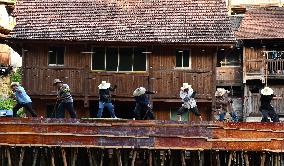
(240718) -- LIUZHOU, July 18, 2024 Photo by Xinhua/ABACAPRESS.COM) -- Villagers attend a wedding in Wuying Village on the border between south China's Guangxi Zhuang Autonomous Region and southwest China's Guizhou Province, Jan. 27, 2024. Wuying Village, spanning a history of over 200 years, is a Miao ethnic group hamlet that nestles snugly in the towering mountains stretching across the border between Guangxi and Guizhou. In the past, the impassable mountains and rugged landscape rendered locals extremely poor. In recent years, Wuying Village has made efforts in the fields of economy, education, culture and ethnic unity, etc. to promote rural vitalization for further development. Photo by Xinhua/ABACAPRESS.COM/Huang Xiaobang)

  •  
(EnchantingGuangxi)CHINA-GUANGXI-MIAO ETHNIC GROUP (CN)

(EnchantingGuangxi)CHINA-GUANGXI-MIAO ETHNIC GROUP (CN)

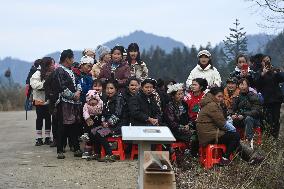
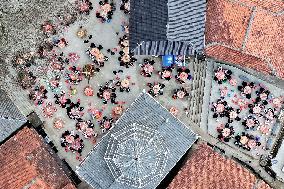
(240718) -- LIUZHOU, July 18, 2024 Photo by Xinhua/ABACAPRESS.COM) -- This aerial drone photo taken on Feb. 14, 2024 shows villagers attending an open-air banquet in Wuying Village on the border between south China's Guangxi Zhuang Autonomous Region and southwest China's Guizhou Province. Wuying Village, spanning a history of over 200 years, is a Miao ethnic group hamlet that nestles snugly in the towering mountains stretching across the border between Guangxi and Guizhou. In the past, the impassable mountains and rugged landscape rendered locals extremely poor. In recent years, Wuying Village has made efforts in the fields of economy, education, culture and ethnic unity, etc. to promote rural vitalization for further development. Photo by Xinhua/ABACAPRESS.COM/Huang Xiaobang)

  •  
(EnchantingGuangxi)CHINA-GUANGXI-MIAO ETHNIC GROUP (CN)

(EnchantingGuangxi)CHINA-GUANGXI-MIAO ETHNIC GROUP (CN)

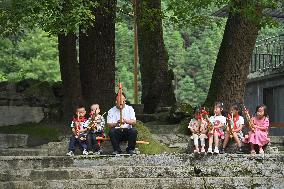
(240718) -- LIUZHOU, July 18, 2024 Photo by Xinhua/ABACAPRESS.COM) -- Children practice Lusheng, a traditional reed-pipe wind instrument, under the guidance of a teacher in Wuying Village on the border between south China's Guangxi Zhuang Autonomous Region and southwest China's Guizhou Province, July 9, 2024. Wuying Village, spanning a history of over 200 years, is a Miao ethnic group hamlet that nestles snugly in the towering mountains stretching across the border between Guangxi and Guizhou. In the past, the impassable mountains and rugged landscape rendered locals extremely poor. In recent years, Wuying Village has made efforts in the fields of economy, education, culture and ethnic unity, etc. to promote rural vitalization for further development. Photo by Xinhua/ABACAPRESS.COM/Huang Xiaobang)

  •  
(EnchantingGuangxi)CHINA-GUANGXI-MIAO ETHNIC GROUP (CN)

(EnchantingGuangxi)CHINA-GUANGXI-MIAO ETHNIC GROUP (CN)

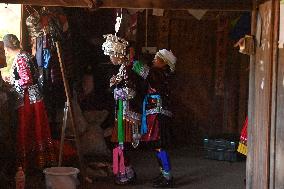
(240718) -- LIUZHOU, July 18, 2024 Photo by Xinhua/ABACAPRESS.COM) -- Villager Pan Meilan (1st R) dresses her daughter for a folk activity in Wuying Village on the border between south China's Guangxi Zhuang Autonomous Region and southwest China's Guizhou Province, Feb. 12, 2024. Wuying Village, spanning a history of over 200 years, is a Miao ethnic group hamlet that nestles snugly in the towering mountains stretching across the border between Guangxi and Guizhou. In the past, the impassable mountains and rugged landscape rendered locals extremely poor. In recent years, Wuying Village has made efforts in the fields of economy, education, culture and ethnic unity, etc. to promote rural vitalization for further development. Photo by Xinhua/ABACAPRESS.COM/Huang Xiaobang)

  •  
(EnchantingGuangxi)CHINA-GUANGXI-MIAO ETHNIC GROUP (CN)

(EnchantingGuangxi)CHINA-GUANGXI-MIAO ETHNIC GROUP (CN)

(240718) -- LIUZHOU, July 18, 2024 Photo by Xinhua/ABACAPRESS.COM) -- A villager works in a field in Wuying Village on the border between south China's Guangxi Zhuang Autonomous Region and southwest China's Guizhou Province, April 12, 2024. Wuying Village, spanning a history of over 200 years, is a Miao ethnic group hamlet that nestles snugly in the towering mountains stretching across the border between Guangxi and Guizhou. In the past, the impassable mountains and rugged landscape rendered locals extremely poor. In recent years, Wuying Village has made efforts in the fields of economy, education, culture and ethnic unity, etc. to promote rural vitalization for further development. Photo by Xinhua/ABACAPRESS.COM/Huang Xiaobang)

  •  
(EnchantingGuangxi)CHINA-GUANGXI-MIAO ETHNIC GROUP (CN)

(EnchantingGuangxi)CHINA-GUANGXI-MIAO ETHNIC GROUP (CN)

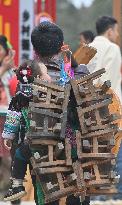
(240718) -- LIUZHOU, July 18, 2024 Photo by Xinhua/ABACAPRESS.COM) -- A villager with wooden benches and a child on his back walks to an open-air banquet in Wuying Village on the border between south China's Guangxi Zhuang Autonomous Region and southwest China's Guizhou Province, Feb. 14, 2024. Wuying Village, spanning a history of over 200 years, is a Miao ethnic group hamlet that nestles snugly in the towering mountains stretching across the border between Guangxi and Guizhou. In the past, the impassable mountains and rugged landscape rendered locals extremely poor. In recent years, Wuying Village has made efforts in the fields of economy, education, culture and ethnic unity, etc. to promote rural vitalization for further development. Photo by Xinhua/ABACAPRESS.COM/Huang Xiaobang)

  •  
(EnchantingGuangxi)CHINA-GUANGXI-MIAO ETHNIC GROUP (CN)

(EnchantingGuangxi)CHINA-GUANGXI-MIAO ETHNIC GROUP (CN)

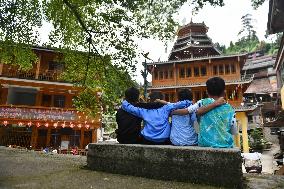
(240718) -- LIUZHOU, July 18, 2024 Photo by Xinhua/ABACAPRESS.COM) -- Villagers engage in conversations after herding sheep in Wuying Village on the border between south China's Guangxi Zhuang Autonomous Region and southwest China's Guizhou Province, July 12, 2024. Wuying Village, spanning a history of over 200 years, is a Miao ethnic group hamlet that nestles snugly in the towering mountains stretching across the border between Guangxi and Guizhou. In the past, the impassable mountains and rugged landscape rendered locals extremely poor. In recent years, Wuying Village has made efforts in the fields of economy, education, culture and ethnic unity, etc. to promote rural vitalization for further development. Photo by Xinhua/ABACAPRESS.COM/Huang Xiaobang)

  •  
MasterOfCrafts | Dragon boat inheritor in SE China's Fujian Province

MasterOfCrafts | Dragon boat inheritor in SE China's Fujian Province

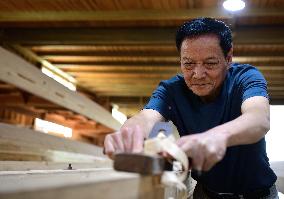
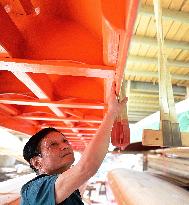
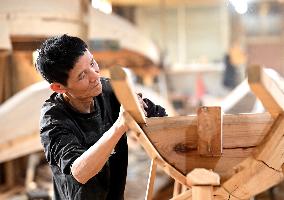
(240605) -- FUZHOU, June 5, 2024 Photo by Xinhua/ABACAPRESS.COM) -- Fang Shaohuang makes a dragon boat at a dragon boat factory in Fangzhuang Village, Fuzhou City of southeast China's Fujian Province, June 3, 2024. As the Dragon Boat Festival approaches, workers in Fangzhuang Village are working flat out to service orders for dragon boats from both home and abroad. Dubbed "the Dragon Boat Village", Fangzhuang has a history of dragon boat making for over 700 years. Every year, over 200 boats are sold from here to the world. Fang Shaohuang, an inheritor of Fangzhuang dragon boat making skills, a Fuzhou city-level intangible cultural heritage, has been fixing and making dragon boats for over 50 years. As the third-generation inheritor of the family, Fang has insisted in making traditional boats only by hands with tools inherited from elder generations. According to Fang, making a dragon boat needs to be particular both in selecting raw materials and in making procedures. The boat mainly uses over 40-year-old Chi

  •  
MasterOfCrafts | Dragon boat inheritor in SE China's Fujian Province

MasterOfCrafts | Dragon boat inheritor in SE China's Fujian Province

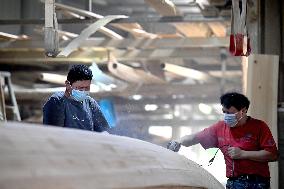
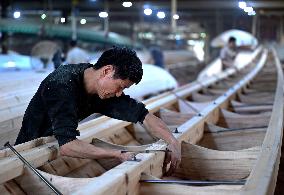
(240605) -- FUZHOU, June 5, 2024 Photo by Xinhua/ABACAPRESS.COM) -- Workers make a dragon boat at a dragon boat factory in Fangzhuang Village, Fuzhou City of southeast China's Fujian Province, June 3, 2024. As the Dragon Boat Festival approaches, workers in Fangzhuang Village are working flat out to service orders for dragon boats from both home and abroad. Dubbed "the Dragon Boat Village", Fangzhuang has a history of dragon boat making for over 700 years. Every year, over 200 boats are sold from here to the world. Fang Shaohuang, an inheritor of Fangzhuang dragon boat making skills, a Fuzhou city-level intangible cultural heritage, has been fixing and making dragon boats for over 50 years. As the third-generation inheritor of the family, Fang has insisted in making traditional boats only by hands with tools inherited from elder generations. According to Fang, making a dragon boat needs to be particular both in selecting raw materials and in making procedures. The boat mainly uses over 40-year-old Chinese fir

  •  
MasterOfCrafts | Dragon boat inheritor in SE China's Fujian Province

MasterOfCrafts | Dragon boat inheritor in SE China's Fujian Province

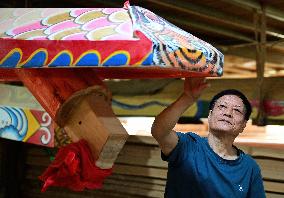
(240605) -- FUZHOU, June 5, 2024 Photo by Xinhua/ABACAPRESS.COM) -- Fang Shaohuang checks a completed dragon boat at a dragon boat factory in Fangzhuang Village, Fuzhou City of southeast China's Fujian Province, May 23, 2023. As the Dragon Boat Festival approaches, workers in Fangzhuang Village are working flat out to service orders for dragon boats from both home and abroad. Dubbed "the Dragon Boat Village", Fangzhuang has a history of dragon boat making for over 700 years. Every year, over 200 boats are sold from here to the world. Fang Shaohuang, an inheritor of Fangzhuang dragon boat making skills, a Fuzhou city-level intangible cultural heritage, has been fixing and making dragon boats for over 50 years. As the third-generation inheritor of the family, Fang has insisted in making traditional boats only by hands with tools inherited from elder generations. According to Fang, making a dragon boat needs to be particular both in selecting raw materials and in making procedures. The boat mainly uses over 40-y

  •  
MasterOfCrafts | Dragon boat inheritor in SE China's Fujian Province

MasterOfCrafts | Dragon boat inheritor in SE China's Fujian Province

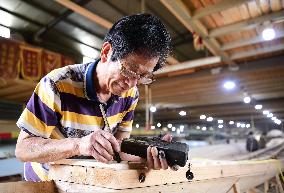
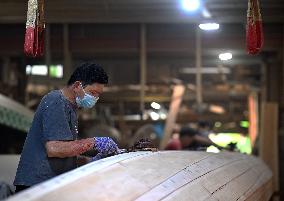
(240605) -- FUZHOU, June 5, 2024 Photo by Xinhua/ABACAPRESS.COM) -- A worker uses an ink marker to draw straight lines for a dragon boat at a dragon boat factory in Fangzhuang Village, Fuzhou City of southeast China's Fujian Province, June 3, 2024. As the Dragon Boat Festival approaches, workers in Fangzhuang Village are working flat out to service orders for dragon boats from both home and abroad. Dubbed "the Dragon Boat Village", Fangzhuang has a history of dragon boat making for over 700 years. Every year, over 200 boats are sold from here to the world. Fang Shaohuang, an inheritor of Fangzhuang dragon boat making skills, a Fuzhou city-level intangible cultural heritage, has been fixing and making dragon boats for over 50 years. As the third-generation inheritor of the family, Fang has insisted in making traditional boats only by hands with tools inherited from elder generations. According to Fang, making a dragon boat needs to be particular both in selecting raw materials and in making procedures. The boa

  •  
MasterOfCrafts | Dragon boat inheritor in SE China's Fujian Province

MasterOfCrafts | Dragon boat inheritor in SE China's Fujian Province

(240605) -- FUZHOU, June 5, 2024 Photo by Xinhua/ABACAPRESS.COM) -- Fang Shaohuang checks a completed dragon boat at a dragon boat factory in Fangzhuang Village, Fuzhou City of southeast China's Fujian Province, May 23, 2023. As the Dragon Boat Festival approaches, workers in Fangzhuang Village are working flat out to service orders for dragon boats from both home and abroad. Dubbed "the Dragon Boat Village", Fangzhuang has a history of dragon boat making for over 700 years. Every year, over 200 boats are sold from here to the world. Fang Shaohuang, an inheritor of Fangzhuang dragon boat making skills, a Fuzhou city-level intangible cultural heritage, has been fixing and making dragon boats for over 50 years. As the third-generation inheritor of the family, Fang has insisted in making traditional boats only by hands with tools inherited from elder generations. According to Fang, making a dragon boat needs to be particular both in selecting raw materials and in making procedures. The boat mainly uses over 40-y

  •  
MasterOfCrafts | Dragon boat inheritor in SE China's Fujian Province

MasterOfCrafts | Dragon boat inheritor in SE China's Fujian Province

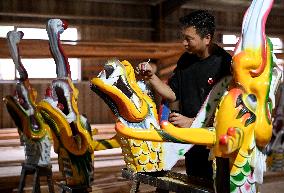
(240605) -- FUZHOU, June 5, 2024 Photo by Xinhua/ABACAPRESS.COM) -- A worker paints the heads of dragon boats at a dragon boat factory in Fangzhuang Village, Fuzhou City of southeast China's Fujian Province, June 3, 2024. As the Dragon Boat Festival approaches, workers in Fangzhuang Village are working flat out to service orders for dragon boats from both home and abroad. Dubbed "the Dragon Boat Village", Fangzhuang has a history of dragon boat making for over 700 years. Every year, over 200 boats are sold from here to the world. Fang Shaohuang, an inheritor of Fangzhuang dragon boat making skills, a Fuzhou city-level intangible cultural heritage, has been fixing and making dragon boats for over 50 years. As the third-generation inheritor of the family, Fang has insisted in making traditional boats only by hands with tools inherited from elder generations. According to Fang, making a dragon boat needs to be particular both in selecting raw materials and in making procedures. The boat mainly uses over 40-year-

  •  
MasterOfCrafts | Dragon boat inheritor in SE China's Fujian Province

MasterOfCrafts | Dragon boat inheritor in SE China's Fujian Province

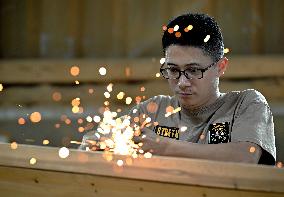
(240605) -- FUZHOU, June 5, 2024 Photo by Xinhua/ABACAPRESS.COM) -- A worker makes a dragon boat at a dragon boat factory in Fangzhuang Village, Fuzhou City of southeast China's Fujian Province, June 3, 2024. As the Dragon Boat Festival approaches, workers in Fangzhuang Village are working flat out to service orders for dragon boats from both home and abroad. Dubbed "the Dragon Boat Village", Fangzhuang has a history of dragon boat making for over 700 years. Every year, over 200 boats are sold from here to the world. Fang Shaohuang, an inheritor of Fangzhuang dragon boat making skills, a Fuzhou city-level intangible cultural heritage, has been fixing and making dragon boats for over 50 years. As the third-generation inheritor of the family, Fang has insisted in making traditional boats only by hands with tools inherited from elder generations. According to Fang, making a dragon boat needs to be particular both in selecting raw materials and in making procedures. The boat mainly uses over 40-year-old Chinese f

  •  
MasterOfCrafts | Dragon boat inheritor in SE China's Fujian Province

MasterOfCrafts | Dragon boat inheritor in SE China's Fujian Province

(240605) -- FUZHOU, June 5, 2024 Photo by Xinhua/ABACAPRESS.COM) -- A worker makes dragon boat at a dragon boat factory in Fangzhuang Village, Fuzhou City of southeast China's Fujian Province, June 3, 2024. As the Dragon Boat Festival approaches, workers in Fangzhuang Village are working flat out to service orders for dragon boats from both home and abroad. Dubbed "the Dragon Boat Village", Fangzhuang has a history of dragon boat making for over 700 years. Every year, over 200 boats are sold from here to the world. Fang Shaohuang, an inheritor of Fangzhuang dragon boat making skills, a Fuzhou city-level intangible cultural heritage, has been fixing and making dragon boats for over 50 years. As the third-generation inheritor of the family, Fang has insisted in making traditional boats only by hands with tools inherited from elder generations. According to Fang, making a dragon boat needs to be particular both in selecting raw materials and in making procedures. The boat mainly uses over 40-year-old Chinese fir

  •  
MasterOfCrafts | Dragon boat inheritor in SE China's Fujian Province

MasterOfCrafts | Dragon boat inheritor in SE China's Fujian Province

(240605) -- FUZHOU, June 5, 2024 Photo by Xinhua/ABACAPRESS.COM) -- A worker makes a dragon boat at a dragon boat factory in Fangzhuang Village, Fuzhou City of southeast China's Fujian Province, June 3, 2024. As the Dragon Boat Festival approaches, workers in Fangzhuang Village are working flat out to service orders for dragon boats from both home and abroad. Dubbed "the Dragon Boat Village", Fangzhuang has a history of dragon boat making for over 700 years. Every year, over 200 boats are sold from here to the world. Fang Shaohuang, an inheritor of Fangzhuang dragon boat making skills, a Fuzhou city-level intangible cultural heritage, has been fixing and making dragon boats for over 50 years. As the third-generation inheritor of the family, Fang has insisted in making traditional boats only by hands with tools inherited from elder generations. According to Fang, making a dragon boat needs to be particular both in selecting raw materials and in making procedures. The boat mainly uses over 40-year-old Chinese f

  •  
MasterOfCrafts | Dragon boat inheritor in SE China's Fujian Province

MasterOfCrafts | Dragon boat inheritor in SE China's Fujian Province

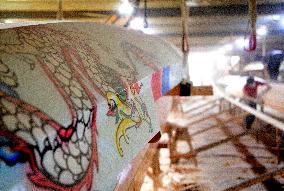
(240605) -- FUZHOU, June 5, 2024 Photo by Xinhua/ABACAPRESS.COM) -- A dragon boat is pictured at a dragon boat factory in Fangzhuang Village, Fuzhou City of southeast China's Fujian Province, June 3, 2024. As the Dragon Boat Festival approaches, workers in Fangzhuang Village are working flat out to service orders for dragon boats from both home and abroad. Dubbed "the Dragon Boat Village", Fangzhuang has a history of dragon boat making for over 700 years. Every year, over 200 boats are sold from here to the world. Fang Shaohuang, an inheritor of Fangzhuang dragon boat making skills, a Fuzhou city-level intangible cultural heritage, has been fixing and making dragon boats for over 50 years. As the third-generation inheritor of the family, Fang has insisted in making traditional boats only by hands with tools inherited from elder generations. According to Fang, making a dragon boat needs to be particular both in selecting raw materials and in making procedures. The boat mainly uses over 40-year-old Chinese fir

  •  
MasterOfCrafts | Dragon boat inheritor in SE China's Fujian Province

MasterOfCrafts | Dragon boat inheritor in SE China's Fujian Province

(240605) -- FUZHOU, June 5, 2024 Photo by Xinhua/ABACAPRESS.COM) -- A worker makes a dragon boat at a dragon boat factory in Fangzhuang Village, Fuzhou City of southeast China's Fujian Province, June 3, 2024. As the Dragon Boat Festival approaches, workers in Fangzhuang Village are working flat out to service orders for dragon boats from both home and abroad. Dubbed "the Dragon Boat Village", Fangzhuang has a history of dragon boat making for over 700 years. Every year, over 200 boats are sold from here to the world. Fang Shaohuang, an inheritor of Fangzhuang dragon boat making skills, a Fuzhou city-level intangible cultural heritage, has been fixing and making dragon boats for over 50 years. As the third-generation inheritor of the family, Fang has insisted in making traditional boats only by hands with tools inherited from elder generations. According to Fang, making a dragon boat needs to be particular both in selecting raw materials and in making procedures. The boat mainly uses over 40-year-old Chinese f

  •  
MasterOfCrafts | Dragon boat inheritor in SE China's Fujian Province

MasterOfCrafts | Dragon boat inheritor in SE China's Fujian Province

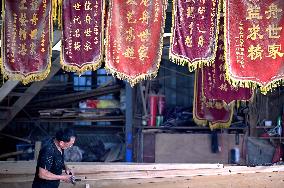
(240605) -- FUZHOU, June 5, 2024 Photo by Xinhua/ABACAPRESS.COM) -- Fang Jianwei, a fourth-generation inheritor of Fangzhuang dragon boat making skills, makes a dragon boat at a dragon boat factory in Fangzhuang Village, Fuzhou City of southeast China's Fujian Province, June 3, 2024. As the Dragon Boat Festival approaches, workers in Fangzhuang Village are working flat out to service orders for dragon boats from both home and abroad. Dubbed "the Dragon Boat Village", Fangzhuang has a history of dragon boat making for over 700 years. Every year, over 200 boats are sold from here to the world. Fang Shaohuang, an inheritor of Fangzhuang dragon boat making skills, a Fuzhou city-level intangible cultural heritage, has been fixing and making dragon boats for over 50 years. As the third-generation inheritor of the family, Fang has insisted in making traditional boats only by hands with tools inherited from elder generations. According to Fang, making a dragon boat needs to be particular both in selecting raw materia

  • Main
  • Top
  • Editorial
  • Creative
  • About Us
  • About ILG
  • Terms of use
  • Company
  • BEHIND
  • Price List
  • Single Plan
  • Monthly Plan
  • Services
  • Shooting
  • Rights Clearance
  • Support
  • FAQ
  • How To Buy
  • Contact Us
  • Become a Partner

© KYODO NEWS IMAGES INC

All Rights Reserved.

  • Editorial
  • Olympics
  • News
  • Sports
  • Japan
  • Tech
  • Royal
  • Disaster
  • NorthKorea
  • Old Japan
  • SNS
  • Creative
  • Food
  • Japan
  • Landscape
  • Animal
  • Popular
  • #Ukraine
  • #Thailand
  • #coronavirus
  • #N. Korea
  • #China
  • #Russia
  • #Ukraine
  • #Thailand
  • #coronavirus
  • #N. Korea
  • #China
  • #Russia
  • Food
  • Japan
  • Landscape
  • Animal
  • Olympics
  • News
  • Sports
  • Japan
  • Tech
  • Royal
  • Disaster
  • NorthKorea
  • Old Japan
  • SNS